
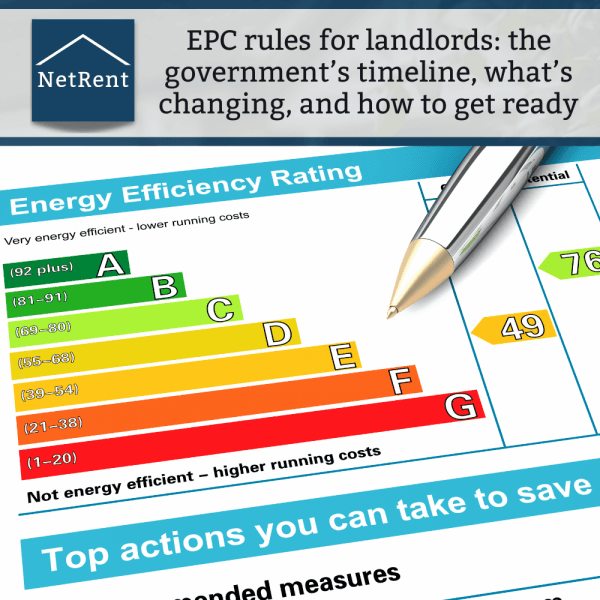
The government's proposed requirement for all privately rented homes to reach an EPC rating of C by 2028 has been the subject of considerable back-and-forth. Uncertainty about the exact timeline is not a reason to wait. The cost of acting early is lower than acting late, and the disruption to a tenanted property is meaningfully higher than to a void one.
Where the legislation currently stands
As of early 2026, the proposal is that all new tenancies will need to meet a minimum EPC rating of C from 2028, with existing tenancies following in 2029. These dates have shifted before. Our strong advice is to treat 2028 as fixed and plan accordingly.
Properties currently rated D or below - which represents a significant proportion of older stock in our area - will need improvement. Properties rated E are legally lettable today but will require attention within two years.
What improvement actually costs
The cost depends heavily on what's driving the current rating. The most common interventions, and their approximate costs:
- Loft insulation (if absent or thin): £300–£600. Significant EPC impact, quick payback.
- Cavity wall insulation: £400–£800 for a typical semi-detached. Effective where walls allow it.
- Double glazing (replacing single): £400–£700 per window. Large impact on older properties.
- Boiler replacement (older G-rated to A-rated condensing): £2,000–£3,500 installed. Often the single biggest EPC gain.
- Solar panels: £5,000–£8,000 for a typical system. Pushes ratings dramatically but higher upfront cost.
Many properties can reach C from D with loft insulation, cavity wall insulation and a boiler service or replacement for a total outlay of £2,000–£4,000. This is far less than most landlords expect.
Properties most likely to need attention
- Pre-1980s solid-wall construction (cavity wall insulation not applicable - solid wall insulation is expensive)
- Flats in older converted buildings where loft and external wall works require freeholder consent
- Properties with electric storage heaters (poor ratings; heat pump replacement is the long-term answer but expensive)
- Top-floor flats with poorly insulated roof spaces
If you're not sure where your property sits, commission an EPC assessment. It costs around £60–£120 and gives you a specific improvement report alongside the rating.
Act in voids, not in tenancies
The practical advice is straightforward: schedule EPC improvement works during void periods. Works in a tenanted property mean disruption to the tenant, risk to the tenancy relationship, and logistical complexity. A void of two to three weeks for improvement works is well worth it if it avoids the alternative.
The landlords who are least stressed about the 2028 deadline are the ones who started thinking about it in 2024. There's still time to be in that group.
How we can help
We can refer you to trusted contractors for EPC assessments and improvement works, and we're happy to advise on prioritisation across a portfolio. This is part of the landlord service we offer - not an add-on.